


| Shanghai Travel Guide |
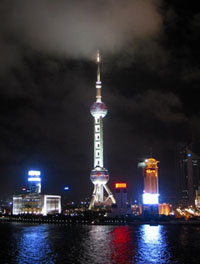
As the most Westernized city in
Weather
Shanghai winters can be very cold and temperatures often drop well below zero. In contrast, the summers tend to be hot and humid. The best time to visit Shanghai is autumn (fall) or spring. During July and September, strong storms with torrential rain become frequent. However, it seldom snows in Shanghai. Shanghai summers are hot and humid. July and August are Shanghai's hottest months with average highs of 27.4 degrees centigrade. In winter, January is the coldest month, with a temperature average of 3 degrees centigrade. All in all, it is best to go prepared with light clothing in summer and warm, heavy clothing in winter. Also, always prepare for rain by keeping an umbrella, but most hotels can equip you with one if needed!
Transportation
Transportation in shanghai is very convenient. It is connected to all provinces and foreign countries by airlines, railways, roads and waterways. Now the urban transportation in shanghai had become 3-dimensional; with elevated roadways above, highways on the ground and subways underground.
> Shanghai Maglev Train

Shanghai Transrapid (上海磁浮示范运营线; Shànghǎi Cífú Shìfàn Yùnyíng Xiàn; literally "Shanghai Magnetic Levitation Demonstration Operation Line") is the first commercial high-speed maglev line in the world. The system and trains were built to the Transrapid standard. Construction began in March 2001, and public service commenced on 1 January 2004. The line runs from Longyang Road station in Pudong, on the Shanghai subway line 2 to Pudong International Airport. The journey takes 7 minutes and 20 seconds to complete the distance of 30 km. A train can reach 350 km/h (220 mph) in 2 minutes, with the maximum normal operation speed of 431 km/h (268 mph) reached thereafter. The line is operated by Shanghai Maglev Transportation Development Co., Ltd.; As of May 2008, the line operates daily between 06:45–21:30, a one-way ticket cost ¥50 ($7.00), or ¥40 ($5.60) for those passengers holding a receipt or proof of an airline ticket purchase. A round-trip return ticket cost ¥80 ($11.20) and VIP tickets cost double the standard fare. The service operates once every 15 minutes. It can be easier and faster for those passengers with destinations in west (Puxi) Shanghai to use a taxi directly from Pudong International Airport.
> Bus
The public transportation system in Shanghai is convenient and cheap, which makes it the first choice for travel. The fare for ordinary buses is 1 yuan and 2 yuan for air-conditioned buses.
> Taxi
Taxis in Shanghai are primarily Shanghai Volkswagens. Each taxi in Shanghai is distinctively marked with a sign on the roof reading “TAXI” and the company name. The charge starts from 11 yuan for the first 3km and 2.1 yuan for each additional km. If you ride between 23:00 and 5:00, the charge starts at 14 yuan for the first 3km and 3.1 yuan for each additional km. 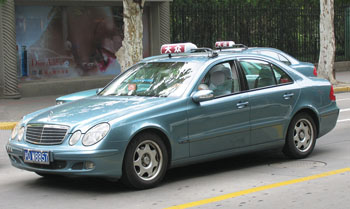
> Metro
The Shanghai Metro is the urban rapid transit system of China's largest city, Shanghai. The system incorporates both subway (di tie) and elevated light railway lines. The Shanghai Metro has become one of the newest and fastest-growing rapid transit systems in the world. Today, there are eight metro lines, 162 stations and 225 km of tracks in operation, making it the longest network in China, exceeding even the Hong Kong MTR. Like many metro systems in the world, the fares on the Shanghai Subway are distance based. As of September 15, 2005, when the Shanghai government raised them, fares ranged from 3 yuan for journeys under 6 km, to 8 yuan for journeys over 46 km. For most lines, the base fare is 3 yuan for journeys under 6 km, then 1 yuan for each additional 10 km. As of April, 2008, the highest fare is 9 yuan. Users of the Shanghai Public Transportation Card get a 10% discount for the rest of the calendar month after paying 70 yuan in a month. Seniors over 70 years of age can take the metro for free (except during rush hours, 7-9am and 5-7pm on weekdays). Apart from the single ticket, payment for the journey can be made by buying a Shanghai Public Transportation Card. This contact less card can be bought for a refundable fee of 30(20 after Nov, 2007) yuan at convenience stores and metro stations.
Shopping

The city has the widest variety of goods in the nation—except for Hong Kong. New downtown brand stores pop up nearly every month to satisfy the locals' seemingly insatiable appetite for ming pai, or famous labels, with such upscale locations as the Bund and Xintiandi specializing in uber-chic brand boutiques. Two streets, Nanjing Lu and Huaihai Lu, have become the city's shopping Mecca’s, and smaller venues such as Taikang Lu and Fuxing Lu offer small, independent boutiques as well as clothing and home-accessory stores. Outdoor markets found in the city's nooks and crannies are interesting too and give insight into Shanghai's bustling street life.
Antiques, Chinese arts and crafts, silk and linen are available in established stores as well as on the street. Be careful when buying antiques as fakes are frequently hidden among the real treasures, and only items dated after 1797 can be legally exported. And no matter what you buy—particularly at markets—be sure to bargain. Settle for around 30%-40% less than thequoted price, but start your bargaining position by offering 10%-15% of what the dealer originally asks for. Keep in mind that a purchase is not a deal unless both sides think they've done well. Shopping Hours: Generally, daily 10 am-10 pm |
| Next > |
|---|
 22°C
22°C  18°C
18°C  22°C
22°C  28°C
28°C  27°C
27°C